An escape room birthday party ideas search usually means one thing: turn the birthday into a puzzle the guests solve as a team, instead of a party they just attend. You can build one at home for under $100, according to the setup MomOf6 documented for a tween party, or book a themed room where a private group plays for 60 minutes, the format Escape The Room sells for birthdays nationwide. Both work. The right one depends on how much prep time you have this week.
- 🎂 Home builds cost under $100, a full printable story, clues, and props, per MomOf6's tested setup.
- ⏱️ Sessions run 35 to 45 minutes, long enough for 3 to 4 puzzles, short enough that younger kids do not lose focus.
- 🔒 A digital lock replaces the padlock hunt, Lock Challenge's free plan gives 3 active locks and 3 steps per game, no shopping trip required.
- 🧩 Professional venues bill by the room, not the guest, Escape The Room fits 4 to 10 people per party package.
Building an escape room birthday party at home means picking a theme, writing a short story, hiding 3 to 4 puzzles, and setting a hard time limit, because the countdown is what makes it feel like an escape room rather than a scavenger hunt with extra steps.
What Actually Makes a Birthday Escape Room Work
A birthday escape room needs four things to feel real: a locked space or object, a story that explains why it is locked, a chain of clues that unlock in sequence, and a clock the kids can see. Skip any one of those and it turns into a regular treasure hunt.
Jessica from MysteryLocks Home Escape Rooms builds this structure into a printable birthday cake kit: players glue a 3D paper cake, fill sealed envelopes with clues, then read an intro card that starts the timer. The cake itself becomes the locked object, and every envelope inside it holds one step toward opening it. That is the whole trick: hide the "why" inside the thing that is locked.
How long should a birthday escape room actually run?
Keep it to 35 to 45 minutes for a home party. WhatsUpMoms ran a full room escape for kids in a converted playroom with a 35-minute countdown, and the creator behind Down the Wrabbit Hole clocked her adult travel-themed room at "about 45 minutes or so," admitting it would have taken longer without generous hints. Anything past 45 minutes and younger players lose the thread; anything under 20 and there is no time to build tension.
Story and Puzzle Ideas You Can Steal Tonight
You do not need a professional kit to write a working story. Questroom's guide for building a birthday party escape room at home lists six ingredients: a theme, a storyline, an objective, a time limit, 3 to 4 puzzles, and a way to celebrate at the end. That last point matters as much as the puzzles: the escape has to lead somewhere, whether that is the cake table or the pile of presents.
Three story hooks that already have puzzles built around them:
- The trapped explorer. In her travel-themed room, the Down the Wrabbit Hole host slid a mirrored letter under the door explaining that guests had trespassed in a rich uncle's treasure room and had to find his trail of clues to escape. The letter itself was a puzzle: it only reads correctly when held up to a mirror.
- The birthday cake vault. MysteryLocks' cake-shaped model works because the object being unlocked (the cake) is also the party's centerpiece, so nobody questions why it is sitting on the table.
- Homework-as-clue. WhatsUpMoms turned an actual homework worksheet into the first combination number, which doubled as a sneaky way to get two kids to finish their assignments before the party even started.
How many puzzles does a kids' birthday escape room need?
Three to four, per Questroom, is enough for a 30-to-45-minute party. Each puzzle should feed a number, letter, or symbol into the next one, so kids cannot skip ahead. WhatsUpMoms chained a UV-light reveal, a Lego combination puzzle, and a scratch-off code into a single four-digit safe combination, which is the kind of layering that keeps a room from feeling like four separate mini-games.
"It flowed very smoothly, all the clues connected, and everyone was excited about the outcome."
Down the Wrabbit Hole, on running a 45-minute DIY escape room
That flow is the part most home builders underestimate. A puzzle that works in isolation but does not hand off cleanly to the next one is where a birthday escape room actually breaks down, not the difficulty of any single clue.
DIY, Print-and-Play, or a Professional Venue
Here is how the three common formats actually compare once you count real prep time and group size, based on the sources cited above and Lock Challenge's own published pricing as of September 2026.
| Format | Typical cost | Setup time | Group size | Best for |
|---|---|---|---|---|
| DIY at home | Under $100 total (MomOf6) | 2 to 3 hours of prep | 4 to 10 kids | Parents who want to write the story themselves |
| Print-and-play kit | One flat kit fee, reused per guest | 30 to 45 minutes prep | Any size, just print more copies | Large guest lists on a tight timeline |
| Hybrid with a digital lock | Free to start, Pro plan at $14.90/month | 15 to 20 minutes to build a 3-lock trail | Unlimited players, unlimited attempts | Parents who want a QR code instead of a padlock |
| Professional venue | Per-person ticket, birthday package pricing | None, staff runs the room | 4 to 10 people per room (Escape The Room) | Milestone birthdays, zero-effort hosting |
SOURCE : MomOf6, Escape The Room, Lock Challenge pricing page · MAJ 09/2026
Should you build the party at home or book a venue?
Book a venue when the group is large, the birthday is a milestone, or you genuinely do not have an evening to spare for prep, since Escape The Room's private-room packages include setup, cleanup, and unlimited hints so the host does not run the game. Build at home when the fun is in the making, the group is 10 people or fewer, and you want the story to be about the birthday kid specifically, not a generic room theme.
Adding a Digital Lock Instead of a Padlock Hunt
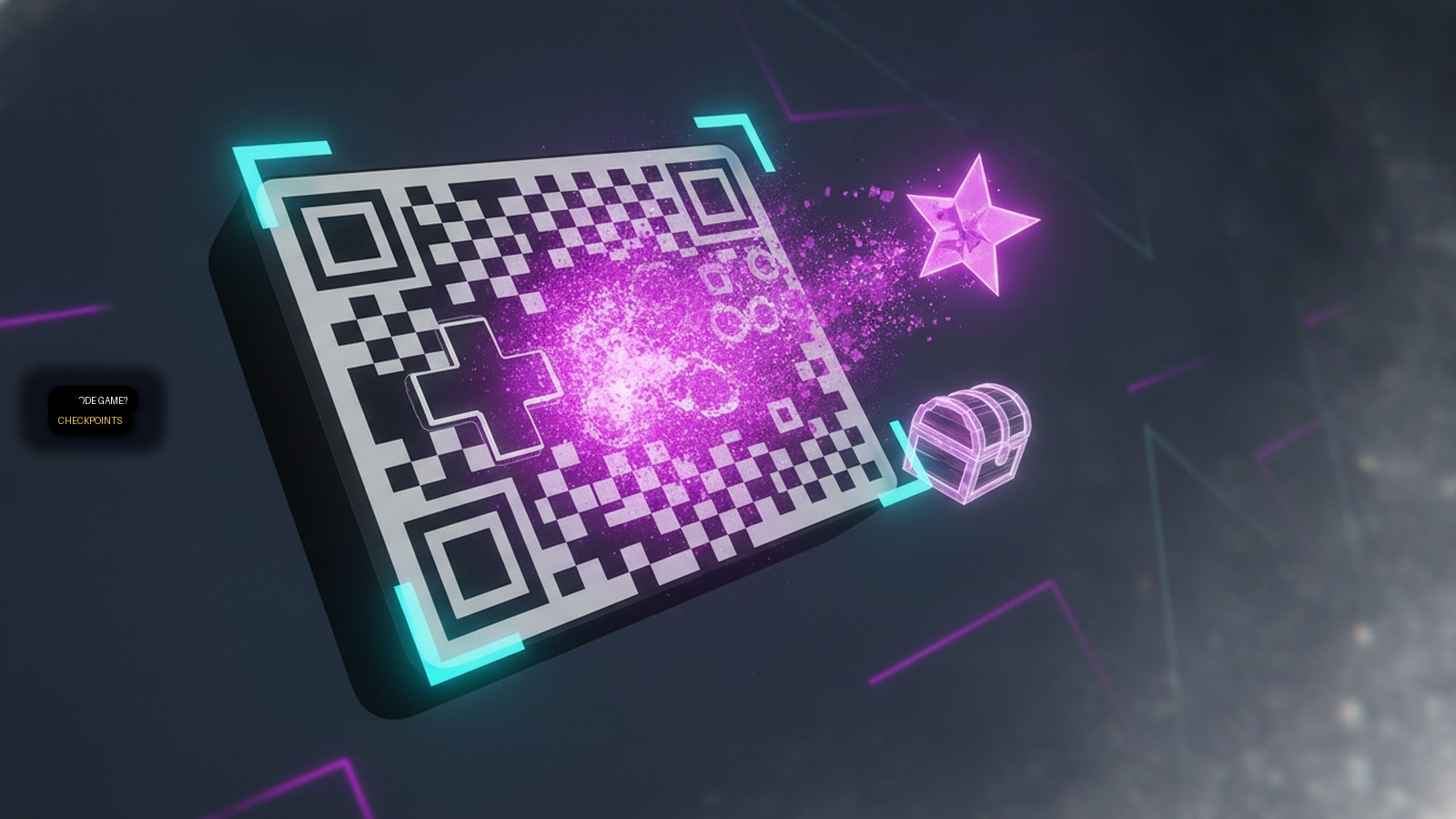
A digital escape game replaces the physical padlock with a link or QR code that the birthday kid's phone opens directly, and the correct answer is checked on the server instead of by matching a number to a lock dial. This is where a paper-and-scissors party can borrow one modern shortcut without buying anything.
Lock Challenge, for example, lets you build a small chain of virtual locks (numeric, pattern, color, or GPS) and print a QR code that guests scan at each hiding spot. The free plan caps out at 3 active locks and 3 steps per game, which is enough for exactly the 3-to-4-puzzle structure Questroom recommends; past that, the Pro plan at $14.90/month (or $118.80/year, $9.90/month) unlocks longer trails and multiple games. There is no player account required and no app to install, which matters when half the guests are ten years old and impatient.
How do virtual locks work in a birthday escape game?
A virtual lock is a webpage that shows a puzzle interface (a numeric dial, a color grid, a set of switches) instead of a physical mechanism, and it only reveals the next clue when the right combination is entered. You hide the QR code the same way you would hide a physical clue, inside a book, taped under a chair, but the "unlocking" happens on the phone screen instead of on a padlock shackle. For a full walkthrough of setting one up, see how to build a digital escape game with virtual locks.
If the party leans younger, pairing one digital lock with mostly physical clues works better than going all-digital: kids under eight still want something to physically open at the end. Ideas for that physical-plus-digital mix are in Escape Room for Kids at Home: A 30-Minute Game You Can Run From Your Phone.
Mistakes That Actually Ruin a Birthday Escape Room
Two things come up across every source here: teams finishing too early, and teams getting stuck with no way forward. Down the Wrabbit Hole admitted she "had to help out" her husband's team more than expected on the harder puzzles, which reinforced that her adult room was not built for a mixed-skill group. On r/askTO, a parent planning a tween birthday noted her group had already tried Daydream escape rooms and "highly recommend" the format for a smaller guest list, which is a useful signal: smaller groups solve faster and need more puzzles, not fewer.
Build in a hint system before the party starts, not during it. Escape The Room offers "unlimited hints" as a standard package feature specifically because a group that stalls for ten minutes stops having fun. At home, the cheapest fix is a sealed "hint envelope" per puzzle that a parent hands over after five minutes of silence.
If you want a bigger bank of ready-made puzzle text so you are not writing every clue from scratch, Escape Room Clues: 50 Ideas Sorted by Puzzle Type is a faster starting point than a blank page.
For scale, the broader experience-based leisure market that escape rooms sit inside keeps getting tracked by market researchers such as Statista, which is worth a look if you are weighing whether to invest in reusable props for more than one party.
The takeaway: pick a story that explains the lock, cap it at 3 to 4 puzzles, hold the timer to 35-45 minutes, and decide upfront whether a digital lock or a padlock does the unlocking. Get those four decisions right and the format works whether you spend $80 on props or $0 with a free QR code.
Frequently Asked Questions
How long should an escape room birthday party last?
35 to 45 minutes works best for most home parties, matching the timing WhatsUpMoms and Down the Wrabbit Hole both used in their documented setups. Shorter sessions do not leave room for a story to build tension, while sessions past 45 minutes tend to lose younger players.
How many puzzles do I need for a kids' birthday escape room?
Three to four puzzles, chained so each one feeds a number or symbol into the next, according to Questroom's step-by-step guide. That is enough complexity for a 30-to-45-minute party without overwhelming the group.
Can I run an escape room birthday party without buying a kit?
Yes. MomOf6's tested setup came in under $100 using printed invitations, a handwritten storyline, and household objects as puzzle pieces, no commercial kit required. A free digital lock, like the ones Lock Challenge offers on its free plan, can replace the padlock entirely if you would rather not buy hardware.
What age is right for a home escape room party?
WhatsUpMoms ran its version for kids age five and up with a simplified 35-minute format, while Down the Wrabbit Hole built a harder, mirror-writing puzzle room aimed at adults and teens. Match the puzzle complexity, not just the theme, to the age group, since a code that requires reading a mirrored letter will stall a five-year-old.
Is a DIY escape room actually cheaper than booking a venue?
Usually, yes, if you count only materials: MomOf6's home build ran under $100 for a full party, while Escape The Room sells birthday packages per person with private-room pricing on top. The trade-off is time. A venue needs no prep from the host, while a home build takes a few hours of gluing, writing, and hiding clues beforehand.
Sources
- How to Throw an Escape Room Birthday Party at Home! — momof6.com
- Escape Room Birthday Parties — escapetheroom.com
- How to Create a Fun Birthday Party Escape Room at Home — questroom.com
- MAKE YOUR OWN ESCAPE ROOM FOR KIDS — lockpaperescape.com
- Birthday Party Planning Checklist — exit-game.de
- PLAY | ESCAPE ROOM FOR KIDS! — WhatsUpMoms
- The Birthday Cake DIY Escape Room Set-Up Instructions — MysteryLocks Home Escape Rooms
- DIY Escape Room || Step-By-Step Tutorial — Down the Wrabbit Hole
- Birthday Escape Room — Loving Math
- Ideas for tween birthday? — r/askTO