What gamified marketing is, and why most of it fades
Gamified marketing means borrowing game design (goals, effort, reward, competition) to change how an audience behaves around a brand. A stamped coffee card is gamified marketing, and so is a spin-the-wheel popup. The first one lasts for decades, the second one usually lasts a week.
Why do points and badges programs fade?
Because they reward presence, not effort. Yu-kai Chou, who built the Octalysis framework, writes on yukaichou.com (current as of October 2026) that most campaigns are forgettable: a brand adds a popup or a hashtag contest, engagement spikes for 72 hours, then silence.
I see the same failure in small teams. Someone builds a points system, nobody can explain what the points buy, and the dashboard becomes a chore to maintain. The mechanic was bigger than the message it carried.
A game mechanic should be lighter than the reward it protects.
What does a mechanic need to work?
funnel.io describes the winning structure in three words: goal, investment, reward. The audience sees a clear goal (a free drink, a discount), invests a little effort, then gets paid. The same page cites researcher Betty Adamou's RAMP model: relatedness, autonomy, mastery and purpose, the four needs that games satisfy.
Read that list again and ask what is the lightest way to satisfy "mastery" in under a minute. A lock with a code to find is one answer.
What the campaigns people remember have in common
The memorable campaigns turn the audience into storytellers. According to yukaichou.com, Spotify Wrapped generates hundreds of millions of organic shares every December, McDonald's Monopoly returns in the US on 6 October 2026 after a nearly four-decade run, and MrBeast reached 472 million YouTube subscribers and 115 billion total views by making every video title a game premise, such as "I Buried $100,000 and Anyone Can Find It."
None of these are loyalty programs in the points sense. Each one is a puzzle, a lottery or a hunt with a clear prize.
Which mechanic fits which marketing goal?
The honest answer depends on what you want people to do. A quiz collects preferences, a leaderboard drives repeat visits, and a lock drives completion of one specific action: watch, read, scan, find. The table below compares the mechanics I would actually pick between for a creator or a small brand.
| Mechanic |
Build effort |
What the audience does |
Best for |
Honest limit |
| Points and badges |
High (accounts, rules, tracking) |
Collects over weeks |
Retention of existing buyers |
Needs an audience that already cares |
| Interactive quiz |
Medium |
Answers questions, gets a result |
Lead capture, product matching |
Result feels generic if the logic is thin |
| Spin-the-wheel popup |
Low |
Clicks once |
Quick email capture |
Forgettable, and visitors expect to win |
| Leaderboard challenge |
Medium |
Competes on score or speed |
Events, teams, launches |
Needs enough players to feel alive |
| Code lock with a hidden answer |
Low |
Finds a clue, enters a code |
Discount drops, giveaways, video retention |
Needs a clue worth finding |
SOURCE : insiderone.com, funnel.io, yukaichou.com and author's own assessment · MAJ 11/2026
For market-level benchmarks on engagement and conversion, research publishers such as Statista track interactive content and loyalty trends; I deliberately keep this article to figures I can name and date.
The lightest mechanic: put the reward behind a lock
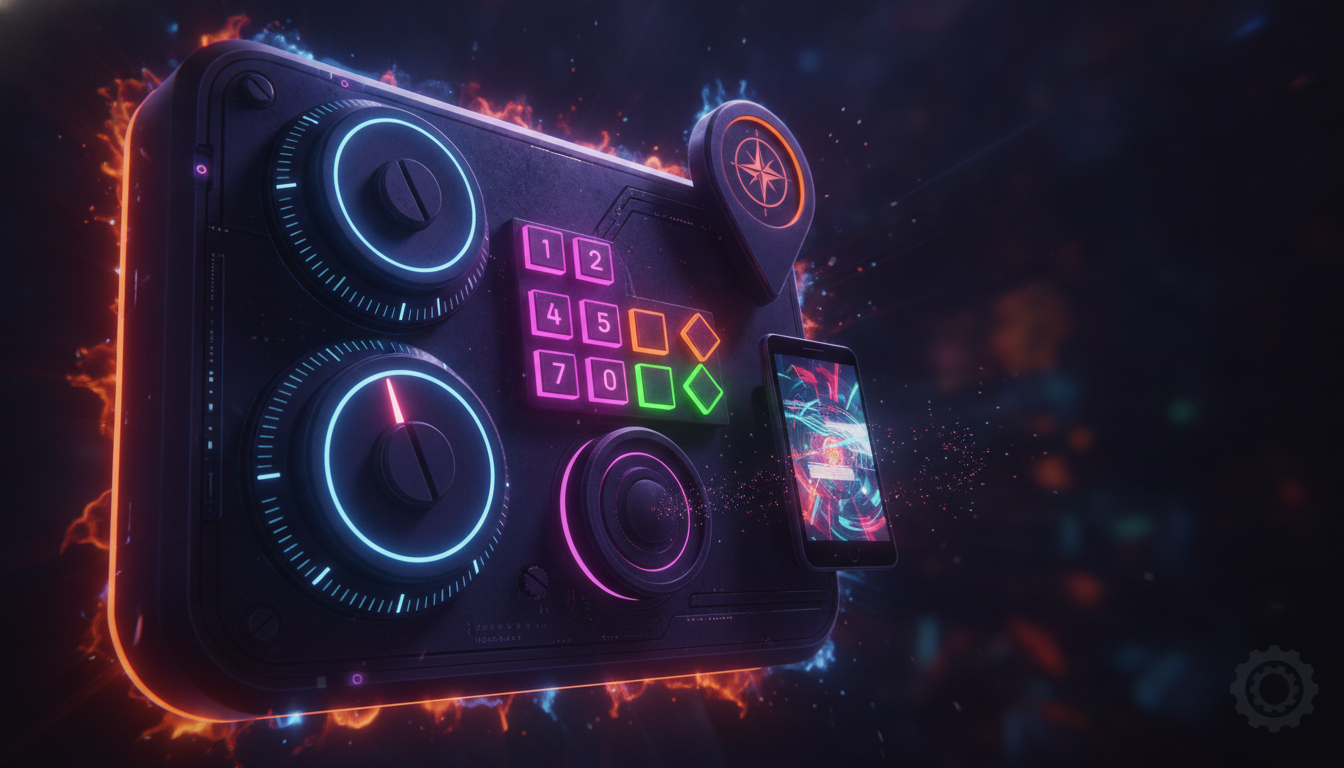
A virtual lock is a code, pattern, colour or musical challenge that stands between a visitor and a piece of content, with the answer checked on the server so it cannot be read from the page source. Lock Challenge builds these locks, shares them by short link, QR code or iframe, and lets you hide a text, a link, a file, an image or a video behind them.
The point for marketers is simple: a lock converts a passive link into a ten-second game with a clear payoff.
How do I run a locked discount drop?
Here is a scenario I would film this week, using the object that fits a promo best. Lock Challenge locks open with filmed unlock animations: the object opens on video, with sound, when the right answer lands. For a discount, the matching film is the coupon, which the creator-drop and promo-code templates open on.
Step 1, the clue. In your video, say a four-digit number out loud at an odd moment, for example "my third rule is to ship on Tuesdays, remember the number 2025." Viewers who skip ahead miss it, so watch time rises for a reason you control.
Step 2, the lock. Create a numeric lock with that code. Set a cap on winners so the discount cannot run away, and add an opening date if the drop starts on a schedule.
Step 3, the reveal. Put the discount code inside. When a viewer types the right number, the coupon opens on video with its sound, the code appears inside it, and a celebration plays. That moment is what people screenshot and share.
Step 4, the distribution. Paste the short link in the description, pin it in a comment, or print the QR code on packaging. Players never pay and need no account.
You can start from the creator template or see every filmed unlock animation on the custom virtual lock page. When you are ready, Start creating your challenge on the creators page. You can build and preview a lock before paying anything.
Where should the answer hide?
The clue decides whether the game works. For a video audience, put it inside the video. For a newsletter, put it in the third paragraph. For packaging, print it on a second product, so the code needs two purchases to find. My rule: the clue should cost thirty seconds of attention, never a scavenger hunt.
If you are still choosing between discount structures, gamified discount ideas lays out the options, and lock code generator explains why random codes fail a giveaway.
How do you measure gamified marketing without fooling yourself?
You measure completions and what they led to, not impressions. A gamified campaign that gets 10,000 views and 40 solves told you more than one that got 100,000 views and no action. Lock Challenge offers a live board, detailed statistics, CSV export, data collection and a webhook, so solves can flow into your own spreadsheet or CRM.
Should you add a leaderboard or a team battle?
Only when competition is the point. Team Battle with a live leaderboard suits a launch event or a sales-floor contest, where people watch each other's score. For a solo viewer finding a coupon code, a leaderboard is noise.
The video from Flooring Cheat Code makes the same case for sales staff. Its host describes store employees paid around $600 a week whether they perform or not, and argues for a base plus a commission bump plus a bonus perk. Where I disagree: stacking cash bonuses is incentive design, not gamification. A game gives a goal and a moment of victory, and the money is only one possible prize.
Can gamified dashboards help your own team?
They can. In Mike Schwede's video on gamified dashboards, a campaign manager navigates ads as streets in a "campaign garden," where height shows cost or leads, and spots a cat ad at 40 francs per song that should be paused immediately. The numbers in the demo were invented, but the principle holds: a legible picture beats a dense table.
The Outgrow tutorial by Dan Thorne lists the standard toolkit: points, progress bars, leaderboards and conditional branching. I would add one question before using any of them: what single action should this change?
My own sample is small. According to my GA4 for the 30 days to 9 September 2026, lockchallenge.com had 1,866 sessions, of which 405 came from AI assistants. That is too small to prove a formula, but it tells me where to write: concrete, citable scenarios, not slogans.
Verdict: start with one lock, not a points system
Gamified marketing works when the reward is earned, the effort is small and the audience can retell the moment. For a creator or a small brand, I recommend starting with one lock guarding one discount, tied to one video, with a cap on winners, rather than building a loyalty program.
Chris Daly, a board-game designer and podcaster interviewed on the Professor Game podcast, gives the same advice from the other direction: people spend so much time hunting for the perfect idea that they never ship, so get something out there and learn from what sticks. One lock is exactly that kind of small, shippable test.
Run it once, count solves against views, and decide from that. If it works, chain several locks into a trail with QR code marketing campaign ideas as the next step, or turn the same mechanic into a lead magnet. To compare plans and features, See current plans and features.
FAQ
What is gamified marketing in simple terms?
Gamified marketing applies game mechanics such as rewards, challenges, leaderboards and progress tracking to marketing activities. The audience takes a small action, like solving a puzzle or finishing a quiz, and gets something in return. It differs from a pure game because the goal is a business behaviour, such as an email signup or a purchase.
Does gamified marketing actually work?
It works when the mechanic is light and the reward is clear. According to insiderone.com, 93% of marketers use gamification to lift engagement, conversion and loyalty, though that figure measures adoption, not results. Measure solves and downstream actions yourself, because campaigns built on novelty alone fade within days.
What is the easiest gamified marketing idea to start with?
A discount code behind a virtual lock whose answer is in your video, newsletter or packaging. It takes about an hour to build, needs no app, and works from a short link or QR code on any phone.
How much does it cost to use virtual locks for marketing?
Players never pay and need no account. See current plans and features on the pricing page.
Can I stop a locked giveaway from being abused?
Yes. The answer is checked on the server, so viewers cannot read it from the page, and you can cap the number of winners or players. That protects your margin if a code is shared widely.